
Pork carcass grading
Phát âmPhiên âm: /pɔ:k 'kɑ:kəs ˈɡreɪdɪŋ/
Từ loại: Noun
Nghĩa tiếng Việt:
Phân loại thân thịt heo
Nghĩa tiếng Anh:
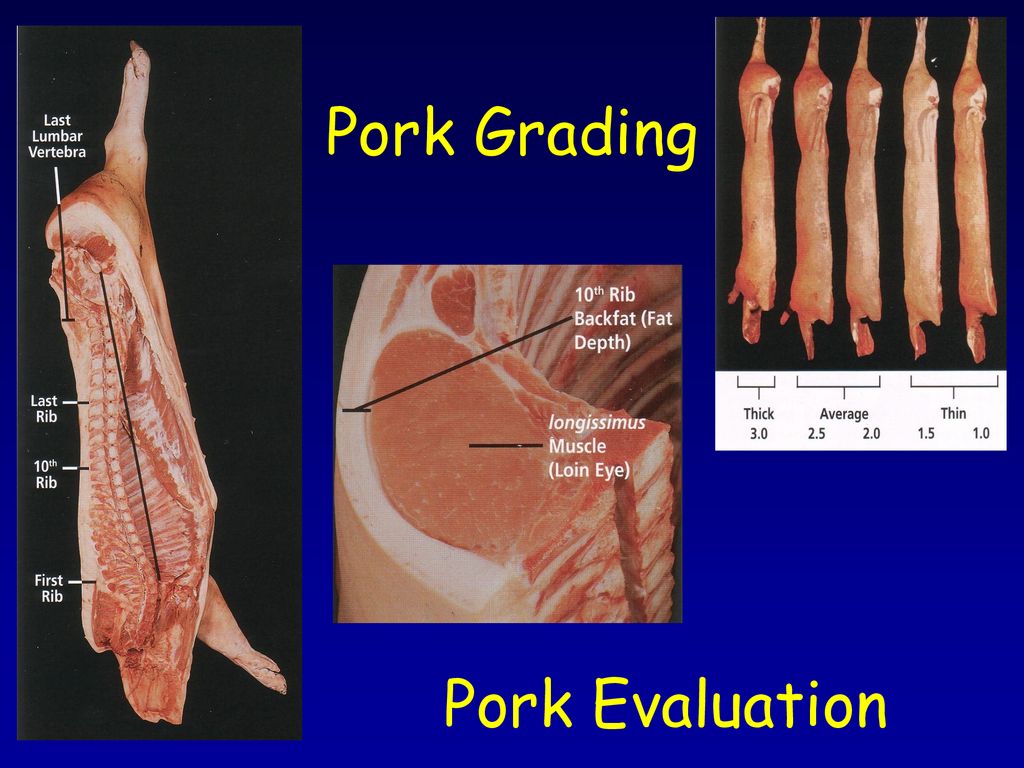
Pork carcass grading is generally based on carcass weight and a measurement of the fat and lean content of the carcass on the slaughter floor before chilling. In Australia, producer payments for pork carcasses are based on hot carcass weight and fat depth at the P2 site, located 65 mm from the midline of the carcass at the last rib. In Canada, the national grading system classifies pork carcasses into indexes based on measurement of fat and muscle depth 7 cm from the midline of the carcass between the third and fourth last thoracic ribs and carcass weight. Within the European Union, carcasses are divided into six classes and assigned a letter (S, E, U, R, O, or P), which indicates estimated lean meat content (S>60%, E=55–60%, U=50–55%, R=45–50%, O=40–45%, and P<40%). In the US, fat depth at the last rib may be measured and the expected yield of four cuts (ham, loin, picnic shoulder, and Boston butt) included in the carcass grading process.
Thuật ngữ liên quan:
Hình ảnh minh họa:
Từ điển ASVM
ASVM là hệ thống tự điển nhằm mục đích cung cấp thông tin chính xác về các thuật ngữ tiếng Anh của chuyên ngành Chăn nuôi - Thú yNhóm nghiên cứu
- PGS.TS. Hồ Thanh Thâm
- ThS. Phan Huy Cường
- TS. Lâm Hoài Bảo
Liên hệ
: asvmdict@gmail.comỨng dụng